
Last updated October 16, 2026
 Water damage drying
 Fire & smoke cleanup
 Mold remediation
 Storm response
 Sewage cleanup
 Reconstruction
Free visual inspection and a written scope of work before any mitigation begins - photos, moisture readings, and drying logs go in your claim file
The scope we write is the scope we bill. Anything new gets shown to you, in writing, before we touch it.
Get your free estimateDamage Restoration Cost Breakdown: The San Antonio Homeowner’s Reference for 2026
Most San Antonio homeowners pay 18 to 34 percent more than the national average for water damage restoration, and the reason has nothing to do with dishonest contractors. The Xactimate estimating software that most insurance adjusters and restoration companies use is publicly documented, which means “we use industry-standard pricing” is not a reason to accept a number you don’t understand. This guide breaks down the actual line items, the real 2026 San Antonio price ranges, and the three local factors that quietly inflate every invoice, and you can find more guides & resources on our blog. By the time you finish reading, you’ll be able to read a restoration estimate the way an adjuster does.
Quick Answer
Water damage restoration in San Antonio typically costs between $3.75 and $7.50 per square foot for mitigation alone in 2026, with most single-room jobs landing between $1,800 and $4,400. A full reconstruction estimate adds $25 to $85 per square foot on top. The final number depends on drying time, which San Antonio’s summer humidity extends by two to four days compared to drier markets.
Restoration work we handle
Table of Contents
- The Six Line Items Every Restoration Estimate Must Include
- Why San Antonio Jobs Cost More: Three Local Factors
- Drying Equipment Rental: How Daily Rates Add Up
- Psychrometric Readings: When Is Dry Actually Dry?
- Mitigation vs. Reconstruction: Two Estimates, No Surprises
- What a Legitimate Written Estimate Must Include
- How Insurance Adjusters Price Your Claim
- Common Mistakes to Avoid
The Six Line Items Every Restoration Estimate Must Include
A legitimate restoration estimate is not a single number. It’s a line-item document that follows a predictable structure. Here’s what every San Antonio homeowner should expect to see, with 2026 market ranges for each category.
- Emergency service call and assessment: $150 to $450. This covers the initial visit, moisture mapping, and written scope of work. Some companies waive this if you proceed with mitigation the same day.
- Water extraction: $0.40 to $1.10 per square foot for standing water removal using truck-mounted or portable extraction units. A 300-square-foot living room with an inch of standing water runs $120 to $330.
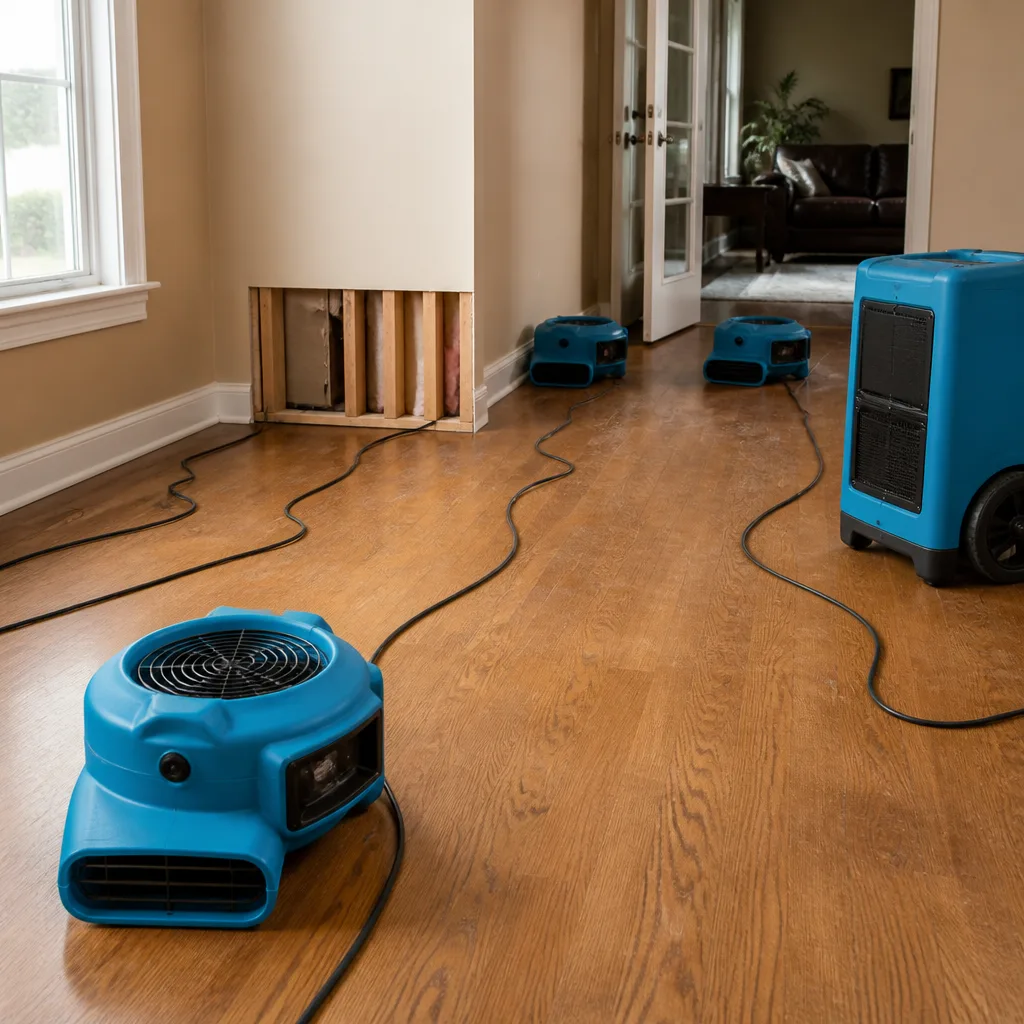
- Drying equipment rental: $45 to $85 per day per air mover, and $65 to $120 per day per dehumidifier. A standard room setup uses 4 to 8 air movers and 1 to 2 dehumidifiers. Day counts are what drive this line item.
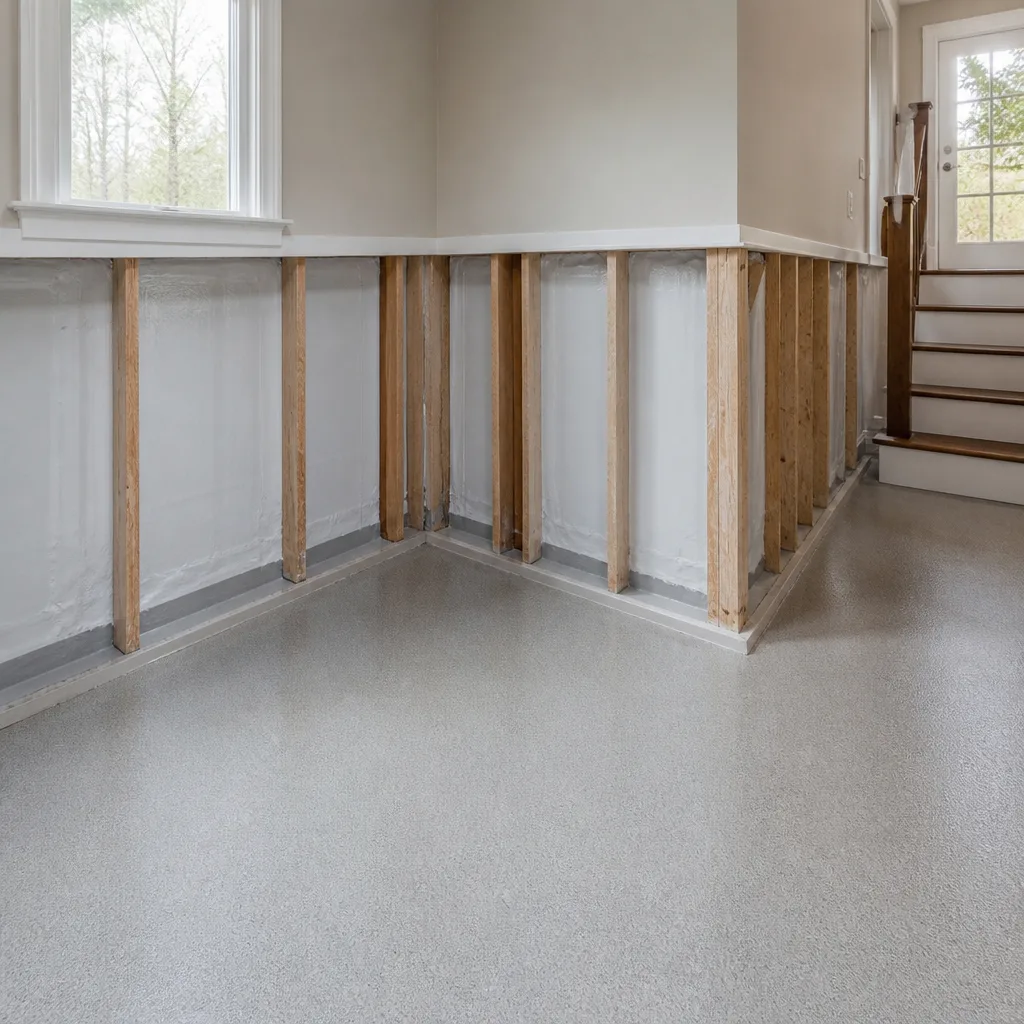
- Demolition and disposal: $2.50 to $5.50 per square foot for removing wet drywall, baseboards, and flooring that cannot be saved. San Antonio’s landfill and hauling fees are moderate, but older homes with multiple layers of flooring push this higher.
- Antimicrobial treatment: $0.35 to $0.75 per square foot for applying EPA-registered antimicrobials to affected surfaces. This is a standard part of mitigation, and skipping it is how you get mold problems six months later.
- Reconstruction: $25 to $85 per square foot depending on finish level. This is where the real cost variance lives, and it’s the line item most likely to change if the original estimate was vague.
These ranges reflect actual 2026 San Antonio pricing, not national averages. When you see a bid outside these numbers, the right move is to ask why, not to assume the company is overcharging or underpricing. A bid far below these ranges usually means something is being left out. A bid far above needs a written explanation.
At Wendell Restoration San Antonio home, we put every line item in writing before the first piece of equipment comes off the truck. That’s not a sales tactic. It’s the only way a homeowner can compare an invoice to what was actually agreed to.
Why San Antonio Jobs Cost More: Three Local Factors
National cost guides are almost useless in San Antonio. This market has three structural features that push restoration costs above the national average, and none of them are contractor padding.
Summer Humidity Extends Drying Days
San Antonio’s average relative humidity runs 65 to 75 percent from May through October, with dew points regularly above 70 degrees. Drying equipment works by pulling moisture out of the air, not just out of walls. When the ambient air is already saturated, dehumidifiers work harder and longer. A water loss that dries in three days in Phoenix can take six or seven days here. Every extra drying day is another $200 to $600 in equipment rental. This isn’t a choice by the restoration company. It’s physics.
Clay Soil and Foundation Moisture Migration
San Antonio sits on expansive clay soil, the same Blackland Prairie clay that runs through much of central Texas. When a pipe bursts under a slab foundation, water doesn’t just pool on the surface. It travels along the foundation line and wicks upward through the slab edges. That means a “small” leak in a utility room can require drying equipment placed against exterior walls in adjacent rooms. In slab homes built before 1990, which are common in neighborhoods like Alamo Heights and Castle Hills, we regularly see moisture readings elevated 10 to 15 feet from the original source. More affected area means more equipment, more demolition, and more drying days.
Aging Cast Iron Pipe Inventory
A significant portion of San Antonio’s housing stock built between 1950 and 1975 still runs on original cast iron drain lines. Cast iron corrodes from the inside out, and when it fails, it often fails in multiple places within a short window. A homeowner who calls for a single drain backup frequently discovers the scope includes replacing a 20-foot section of line, not just drying a wet closet. This is a real cost driver that national guides don’t capture. The scope of work expands because the plumbing reality demands it, not because a restoration company is looking for add-ons.
Drying Equipment Rental: How Daily Rates Add Up
Drying equipment is where restoration estimates either stay honest or quietly balloon. The equipment is rented by the day, not by the job. Here’s how the math works in 2026 San Antonio pricing.
A standard Category 2 water loss (gray water from a washing machine overflow or a sink backup) affecting a 200-square-foot kitchen typically requires:
- 4 air movers at $55 to $75 per day each: $220 to $300 daily
- 1 large dehumidifier at $85 to $110 per day: $85 to $110 daily
- Daily total: $305 to $410
- Five drying days: $1,525 to $2,050 in equipment alone
That’s before extraction, demolition, antimicrobial treatment, or reconstruction. When a company gives you a “total restoration cost” without showing the daily equipment rate and the projected day count, you cannot verify whether that number is fair. The daily rate is set by the equipment type and brand. We run Dri-Eaz and Phoenix dehumidifiers, XPOWER and B-Air air movers, and Injectidry systems for hardwood floor and behind-wall drying. These are professional restoration units, not the fans you buy at a hardware store, and the difference in extraction volume is significant.
The day count is where homeowners have the most leverage to ask questions. Five days may be legitimate for a saturated kitchen in July. The same five days in February, when San Antonio’s humidity drops to 40 percent, is harder to justify. A legitimate company will show you the daily moisture readings that justify the equipment staying on site. No readings, no justification.
Psychrometric Readings: When Is Dry Actually Dry?
Psychrometric drying is the process of tracking the air’s moisture level so we know when your home is truly dry, not just surface-dry. Technicians monitor three numbers throughout the drying process:
- Temperature: Warmer air holds more moisture. Technicians typically keep the affected space between 70 and 90 degrees during active drying because warmer air accelerates evaporation.
- Relative humidity (RH): This is the percentage of moisture in the air relative to what it can hold at that temperature. The target during drying is to bring the affected space below 45 percent RH, which is the threshold where mold growth becomes unlikely.
- Dew point: The temperature at which moisture condenses out of the air. A lower dew point inside the drying chamber than outside means the dehumidifier is actually pulling moisture from the structure rather than just spinning its wheels.
These readings tell us when drying is complete, and the standard is specific. Per IICRC protocol, drying is considered complete when the moisture content of affected materials returns to within 3 to 4 percentage points of an unaffected control reading in the same room. That’s not a judgment call. It’s a measurement.
Here’s the practical implication for your invoice. A company that pulls equipment after three days because “it feels dry” is guessing. A company that keeps equipment running for eight days should be able to produce the daily moisture log showing why. In our experience, the honest middle is a documented three to six days for most San Antonio water losses, with the longer end clustered in summer months.
Mitigation vs. Reconstruction: Two Estimates, No Surprises
The single most common source of mid-project disputes in damage restoration is the gap between a mitigation estimate and a reconstruction estimate. They are two separate scopes of work, and homeowners who only receive one are being set up for a surprise.
Mitigation is stopping the damage and drying the structure. It includes extraction, equipment placement, daily monitoring, demolition of unsalvageable materials, and antimicrobial treatment. Mitigation is urgent, measured in days, and often covered under the “emergency services” portion of a homeowners policy.
Reconstruction is putting the home back together. It includes drywall replacement, painting, flooring, trim, and sometimes cabinet or countertop work. Reconstruction is not urgent, is measured in weeks, and is priced like a remodel, not an emergency.
A mitigation-only estimate of $3,200 for a kitchen water loss tells you nothing about what it will cost to rebuild the kitchen. A full reconstruction estimate tells you everything, but it takes longer to produce because it involves finish selections and material pricing. You should receive both before signing anything. Getting both in writing, even if the reconstruction number is a preliminary range, is the difference between a $4,000 job and a $14,000 job that you only learn about after the drywall is already gone.
This is where the “free estimate” from a company that only does mitigation becomes expensive. They quote the emergency work, complete it, and then hand you off to a general contractor with no pricing commitment. A restoration company that handles both scopes, like our Water Damage Restoration in San Antonio team, can give you one document with both numbers before the first cut is made.
What a Legitimate Written Estimate Must Include
Here’s the minimum a written restoration estimate should contain in 2026. If any of these elements are missing, the estimate is not complete, and you should not approve work.
- Moisture map: A diagram or digital rendering showing which walls, floors, and ceilings measured elevated moisture, with the actual readings. This proves the affected area is what the company claims it is.
- Equipment list with daily rates: The number of air movers and dehumidifiers, the brand, the daily rate for each, and the projected number of drying days. A lump sum for “drying” is a red flag.
- Square footage calculations: Every demolition, extraction, and treatment line item should reference the measured square footage it applies to. “Drywall removal: 180 sq ft at $3.75/sq ft” is a legitimate line item. “Drywall removal: $675” without the square footage is not.
- Antimicrobial and treatment scope: Which product is being applied, to which surfaces, at what coverage rate. This should be specified, not described as “treatment as needed.”
- A not-to-exceed clause: The estimate should state that the final invoice will not exceed the written amount by more than a specified percentage, typically 10 percent, without your written approval. No clause, no protection.
Every job from Water Damage Repair in San Antonio includes a written price before work starts. That’s not a promotional offer. It’s how the 2006 founding of Wendell as part of the Relay Home Co. family was structured from the beginning: book in a tap, live arrival time, photo updates, price in writing, text invoice. The number on the screen is the number you pay.
How Insurance Adjusters Price Your Claim
Insurance adjusters in San Antonio use Xactimate, the same software that restoration companies use. Xactimate maintains a zip-code-specific price database that updates monthly. So when an adjuster approves a $3.20 per square foot line item for drywall removal, that’s the documented market rate for Bexar County in that month, not a number the adjuster invented.
This matters for two reasons. First, restoration companies that quote far above Xactimate pricing will get the difference rejected by the carrier, and that becomes your problem. Second, companies that quote far below Xactimate pricing are cutting scope somewhere, and that also becomes your problem. The legitimate range is narrow.
Photo documentation is the other piece of the insurance equation. Adjusters approve line items based on evidence, not narrative. When a restoration company provides daily photo updates showing the water extraction, the equipment placement, the demolition, and the drying progress, the adjuster has what they need to approve the line items. Companies that do not provide documentation slow down their own payments and create friction for the homeowner. This is why we send before-and-after photos by text as a standard part of every job, not as an add-on when a homeowner asks.
If you’re dealing with a claim, ask your restoration company directly: “Do you coordinate directly with my adjuster, and do you provide photo documentation for every line item?” A company that hesitates on either question is telling you something.
Common Mistakes to Avoid
- Accepting a verbal estimate with no written scope. A verbal quote cannot be enforced, and the moment the first dispute arises, the company’s memory of what was promised will differ from yours. Always require the estimate in writing before equipment goes down.
- Approving mitigation without a reconstruction plan. Demolition is fast. Rebuilding is slow and expensive. If you don’t know the rebuild cost before demolition starts, you’re signing up for a price you can’t see.
- Not asking for the daily moisture log. Drying equipment is rented by the day, and every extra day is real money. A company that can’t show daily readings can’t justify its day count. Insist on the log, or at minimum a final set of readings showing the structure returned to baseline.
- Using a company that subcontracts everything. When the mitigation company subs out the extraction, the drying, and the reconstruction to three different crews, accountability disappears. Ask who will actually be in your home, and ask if they are employees or subcontractors.
- Signing an open-ended work authorization. Some restoration companies have homeowners sign a document that essentially approves any work the company deems necessary, without a dollar cap. That’s a blank check. The authorization should reference the written estimate and include the not-to-exceed clause.
- Ignoring the humidity problem in San Antonio specifically. Homeowners who expect a three-day dry time in August are making a math error, not a judgment error. The humidity extends drying days, and fighting it costs money. The right conversation is about whether each extra day is justified by readings, not whether the job is taking too long.
See the difference
 Before
 After
After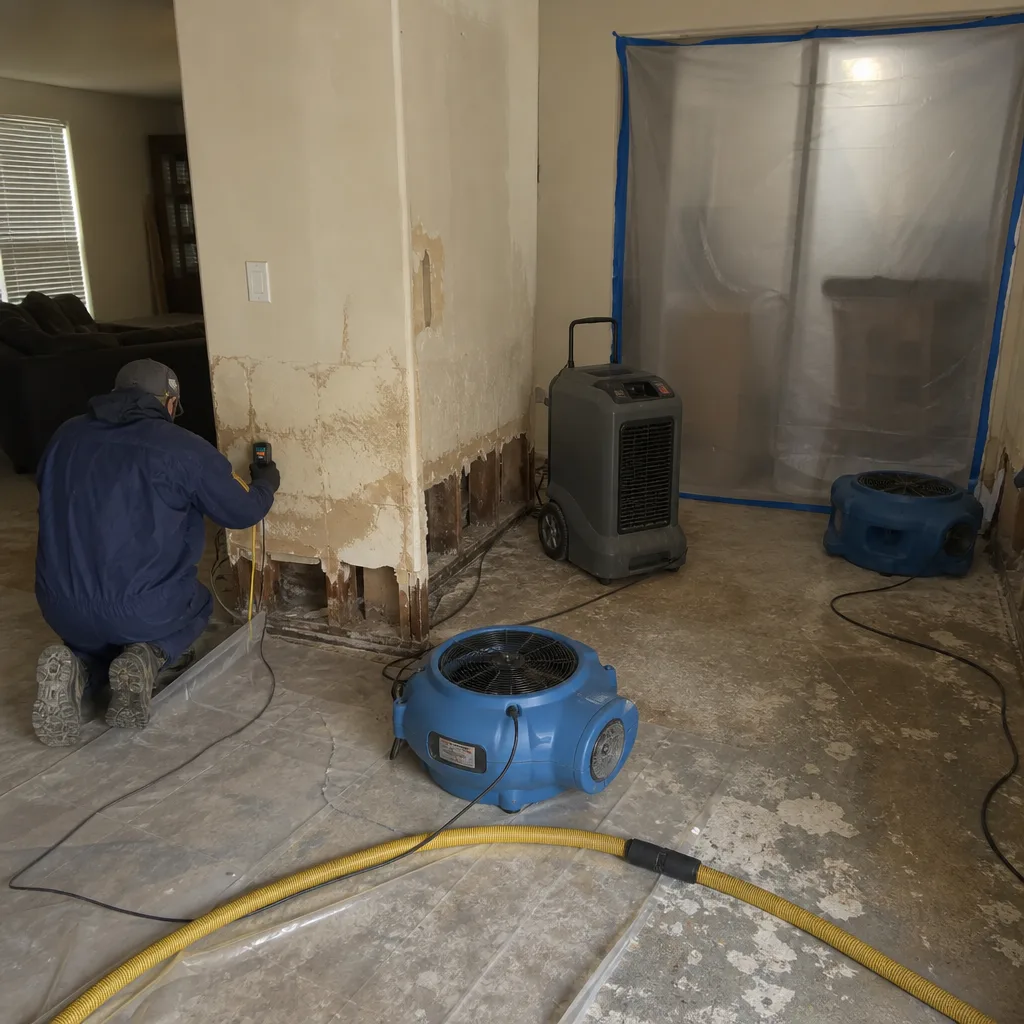 Before
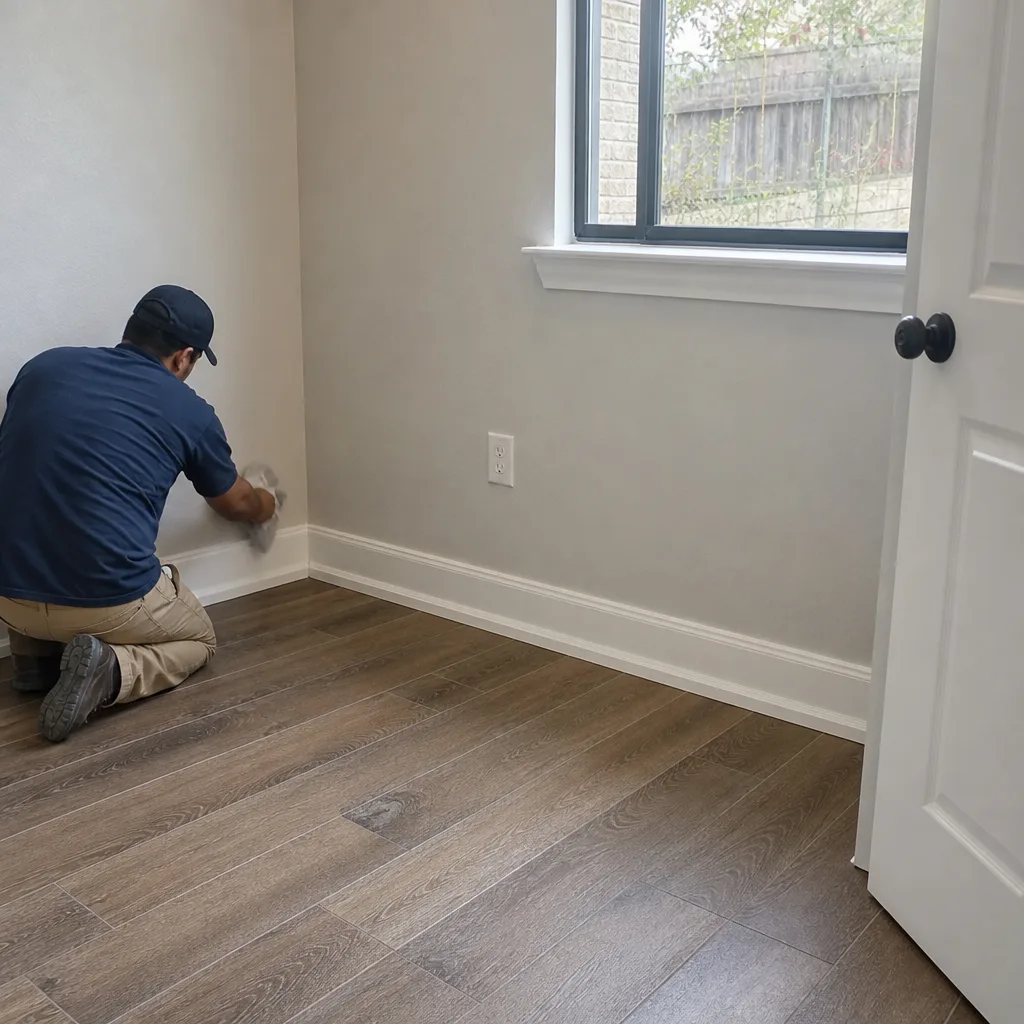 After
After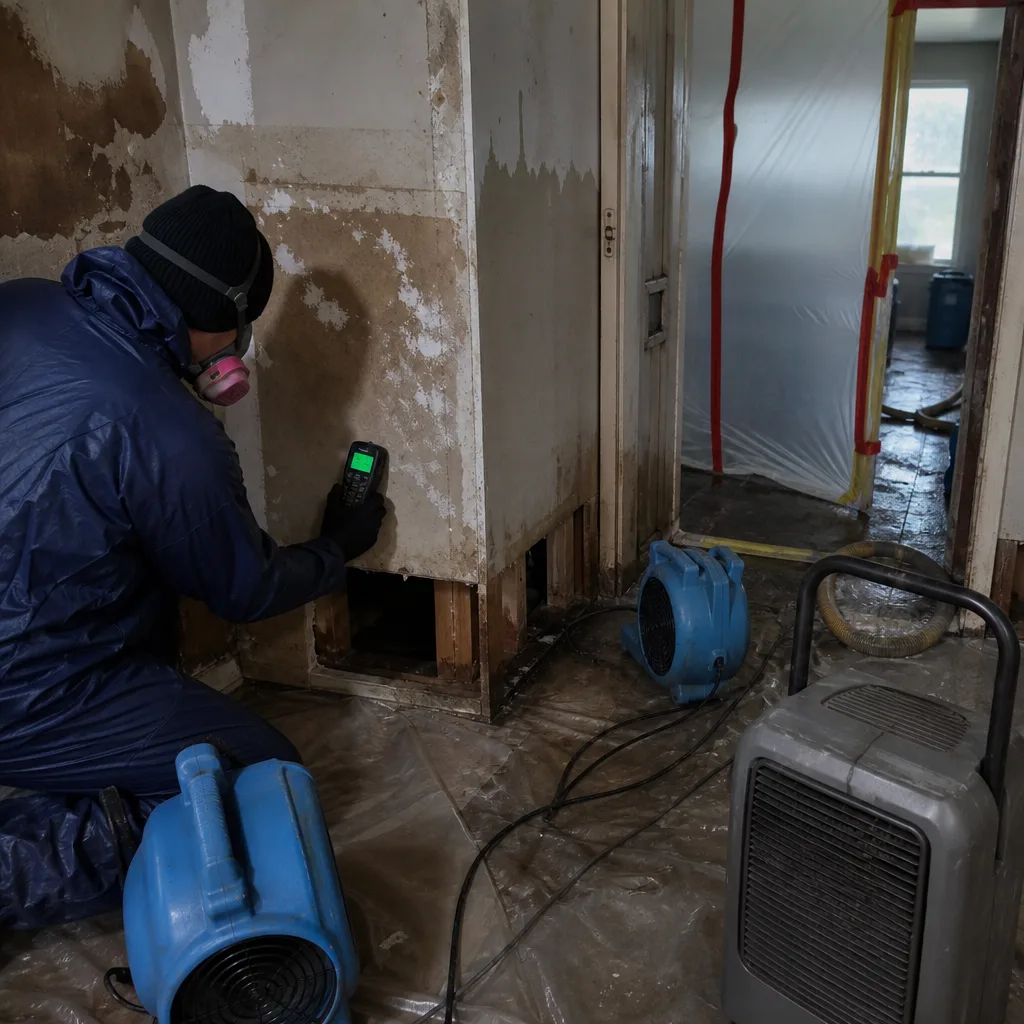 Before
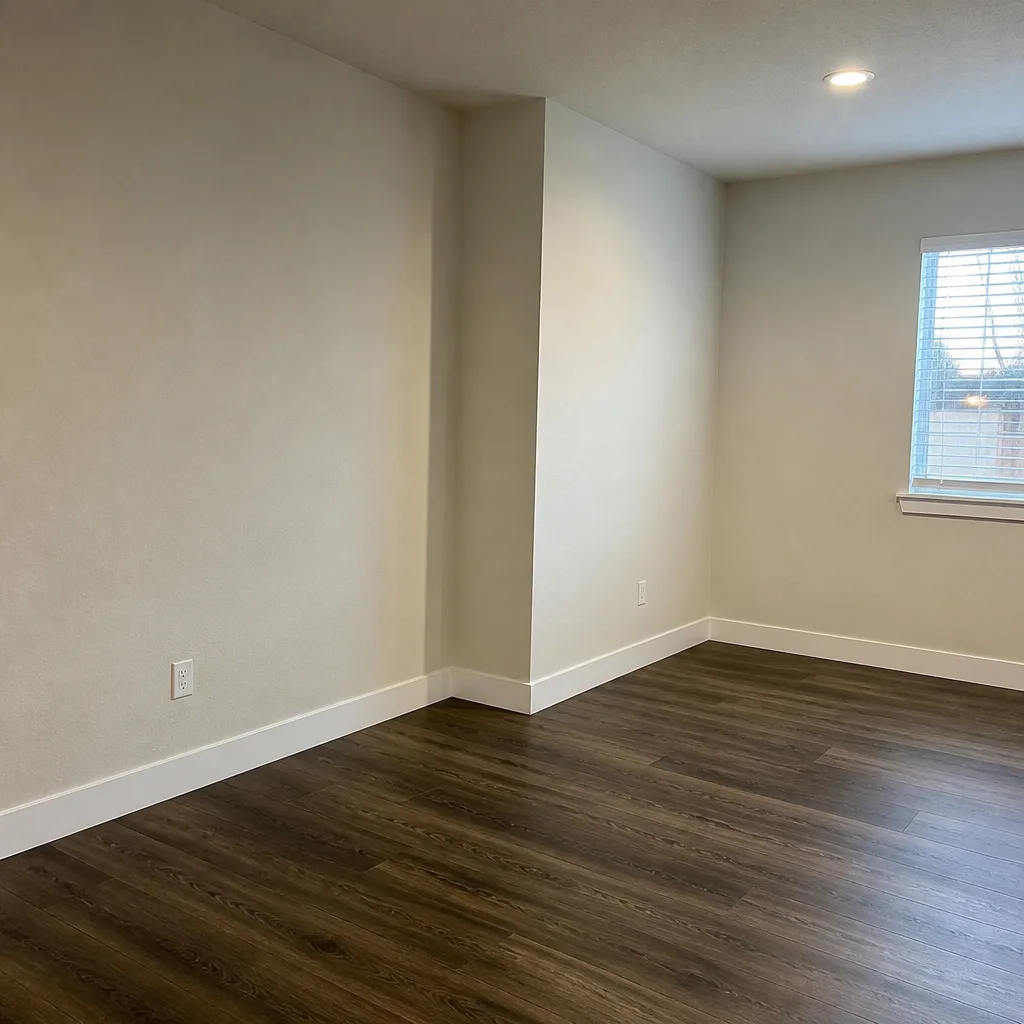 After
AfterWhen to Call a Professional
Some water damage is obvious at midnight. A pipe bursts, the ceiling caves in, and there’s no question about next steps. But the cases that go wrong are the quiet ones. A slow leak under a sink that has been seeping into the cabinet base for weeks. A water heater that failed while nobody was home and left a half-inch of water across a laundry room floor. A musty smell that showed up in a hallway with no visible water. These are the situations where homeowners wait, and waiting is what turns a $2,500 mitigation into a $9,000 reconstruction with mold remediation added on. For help spotting problems early, see our Damage Restoration Warning Signs: A San Antonio Homeowner’s Reference Guide. If you can see water, smell dampness, or notice warping on baseboards or flooring, the damage is already spreading. Call a professional the same day. Wendell Restoration San Antonio offers free estimates in San Antonio – call (325) 413-9949 and a live person will answer, 24/7.
Frequently Asked Questions
Water damage restoration in San Antonio costs $3.75 to $7.50 per square foot for mitigation, with most single-room jobs landing between $1,800 and $4,400. Full reconstruction adds $25 to $85 per square foot depending on finish level. Call (325) 413-9949 for an exact quote based on your specific damage – estimates are free.
Most San Antonio water losses dry in three to six days, with summer jobs running longer due to the region’s 65 to 75 percent average relative humidity. A company should show you daily psychrometric readings – temperature, relative humidity, and dew point – to justify the equipment day count.
Most standard homeowners policies cover sudden and accidental water damage, such as a burst pipe or appliance failure, but exclude gradual leaks and flood damage. Your restoration company should coordinate directly with your adjuster and provide photo documentation for every line item on the estimate. Call (325) 413-9949 and ask about direct adjuster coordination.
Mitigation stops the damage and dries the structure, including extraction, equipment, demolition, and antimicrobial treatment. Reconstruction rebuilds what was removed, including drywall, paint, and flooring. Ask for both estimates in writing before any work starts so there are no mid-project surprises.
Professional drying equipment such as Dri-Eaz dehumidifiers and XPOWER air movers is rented daily because the equipment is only on site as long as drying requires it. The day count should always be justified with daily moisture readings, not a fixed schedule.
Antimicrobial treatment is a standard part of IICRC protocol after a water loss because wet building materials begin supporting mold growth within 24 to 48 hours. The treatment costs $0.35 to $0.75 per square foot, which is a small fraction of what mold remediation costs later. It is not an upsell.
Compare their line items against the ranges in this guide, check that every line item includes square footage, and confirm the estimate has a not-to-exceed clause. A legitimate estimate will also include a moisture map and an equipment list with daily rates. Companies using Xactimate should be within a narrow range of each other because the pricing database is zip-code specific.
The Bottom Line
San Antonio restoration pricing is explainable, repeatable, and verifiable. The unit costs are published in Xactimate, the equipment rates are standard across the industry, and the drying times follow from the region’s climate. What separates a transparent restoration company from a vague one is whether they show you the line items, the daily readings, and the written scope before work starts. Ask for the moisture map, the equipment list, the square footage calculations, and the not-to-exceed clause. If a company will not provide those four documents in writing, call someone who will. For San Antonio homeowners, that someone is Wendell Restoration San Antonio at (325) 413-9949.
Written by Blake Sorensen, Owner at Wendell Restoration San Antonio, serving San Antonio since 2006.